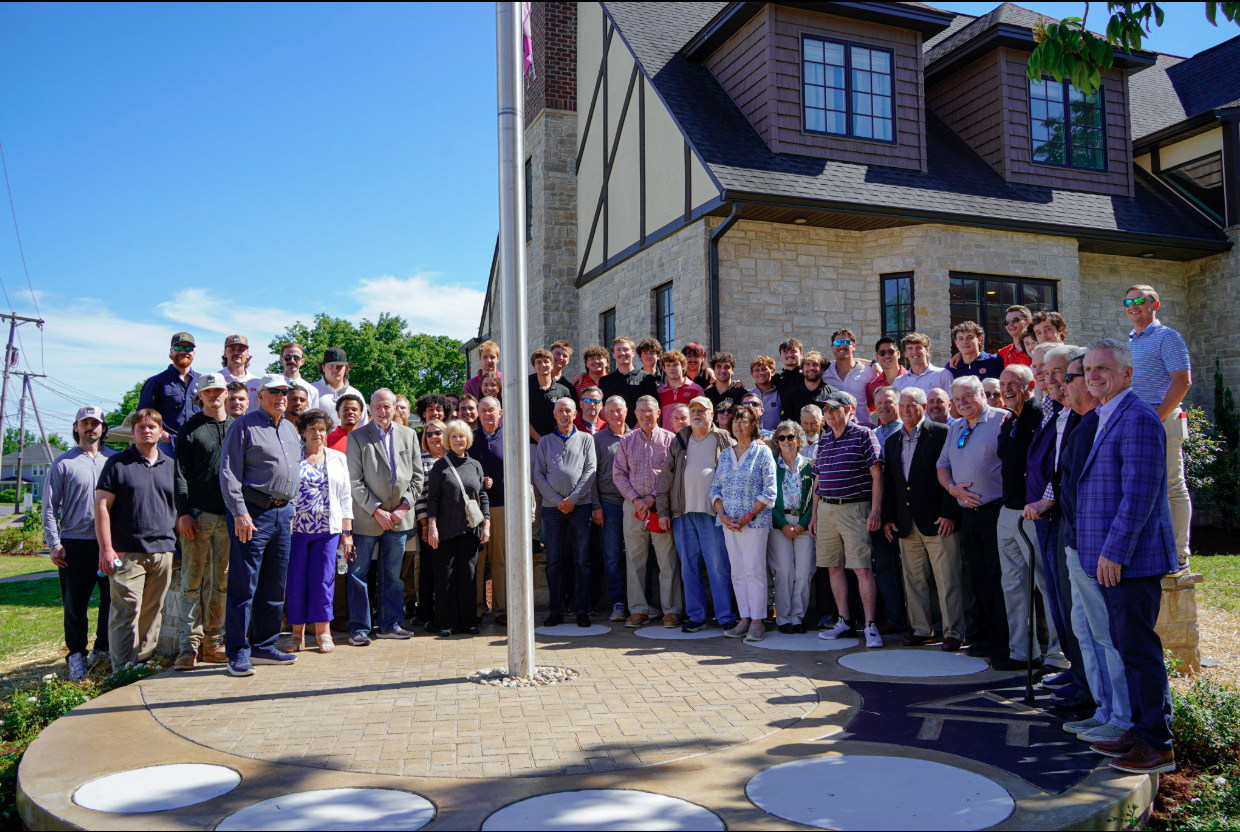
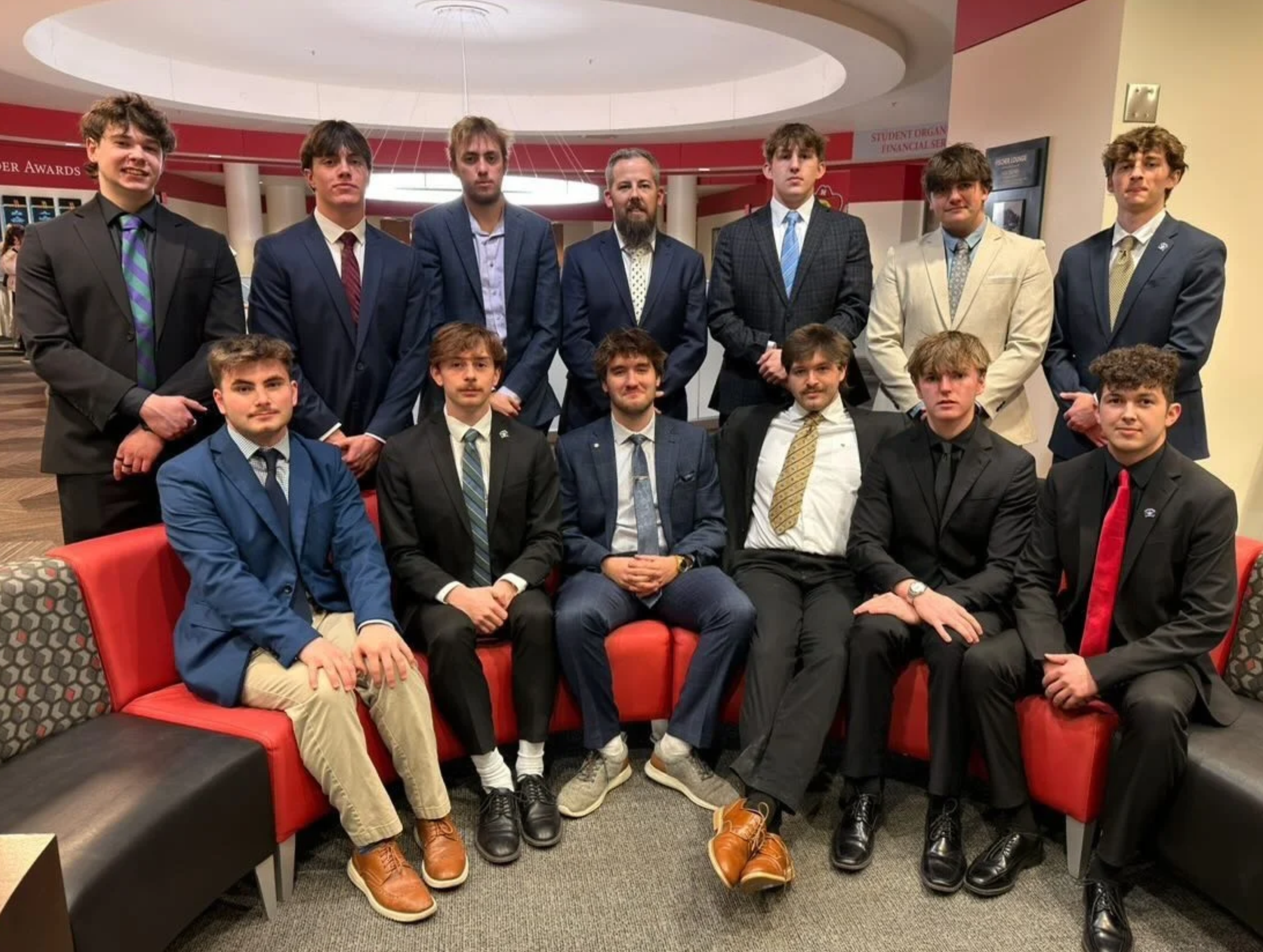
When Lambda Chi Alpha began its return at the University of Nebraska-Lincoln in 2024, many of the Brothers who would become Gamma-Beta Zeta’s Founding Fathers were freshmen. They were learning how to navigate college while also learning how to build a Chapter.
Two years later, the Chapter has earned its Charter and established itself on campus. But for current High Alpha Adam Kapustka (Nebraska-Lincoln, ’28), the most meaningful part of the experience has been what the Brothers have built together along the way.
In the beginning, there was a lot to learn. Recruitment Coordinators at the Office of Administration helped the Brothers understand the basics of recruitment and Chapter operations. The Brother then had to take those lessons and put them into practice.
That process wasn’t always smooth.
“We failed way more than we won,” Kapustka said. “But that’s what makes you win in the end.”
The Brothers learned quickly that building a Chapter required more than filling positions and holding meetings. It meant figuring out how they wanted to operate, what they expected from one another and what kind of experience they wanted to create for the people who joined after them.
Learning as They Went
The early years came with plenty of trial and error. The Chapter had to work through challenges with recruitment and retention, replace Officers who left early in the process and improve its organizational structure. Even its first bylaws needed to be reworked. Rather than seeing those experiences as setbacks, the Brothers used them to figure out what needed to change. One of the biggest lessons was the value of structure. As the Chapter became more organized, Brothers found that having clearer expectations made it easier to keep people involved and gave everyone a better understanding of their role.
That lesson has extended into leadership. Kapustka said one of the biggest things the Brothers have learned is how to work with different kinds of people.
“You can deal with everyone a different way,” he said.
Leading a Chapter has meant learning when to be direct, when to listen, and how to help different Brothers respond to expectations in different ways. For a group that started with many Members still in their first year of college, those lessons have become part of growing alongside the Chapter. Recruitment has offered another kind of education. Every Brother has a role in meeting potential new members, which has pushed them to become more comfortable talking to people, taking initiative, and hearing no without taking it personally.
Kapustka describes the Chapter’s culture as underdog, driven, and motivated.
Those words have followed Gamma-Beta Zeta from its earliest days, but they aren’t necessarily about proving something to everyone else. They are more about wanting to see how far the Chapter can go.
Putting It Into Practice
That mindset can be seen in the way Gamma-Beta Zeta approaches its events and involvement on campus. The Chapter has organized blood drives, volunteered in the local community and participated in campus and IFC activities. Its Watermelon Bash has become one of its larger philanthropy events. The event also shows how the Chapter has matured.
The first Watermelon Bash didn’t go as planned. The Brother had started planning too late and weren’t as organized as they needed to be. The next time, they approached it differently. They began planning about a month ahead of time, set expectations for ticket sales, and assigned Brothers to specific parts of the event. Games, activities, and logistics were planned in advance, and the Chapter chose a location where students could easily find the event.
It was a simple lesson, but an important one: when everyone knows what they are responsible for, the whole group benefits. That approach has helped Gamma-Beta Zeta develop a positive reputation on campus. The Brothers have built relationships with other fraternities and sororities and have become active participants in the broader campus community.
Something Worth Passing On
The Founding Fathers are also beginning to think beyond their own college experience. Gamma-Beta Zeta has developed a five-year plan with goals around membership growth, retention, academics, philanthropy, and service. The Chapter hopes to reach 80-100 Members while maintaining the close Brotherhood it has developed. The goal isn’t to be known for just one thing.
“We don’t want to just be known for having the best philanthropy,” Kapustka said. “We also want the best grades, the highest retention.”
That ambition comes from wanting the Chapter to be well-rounded, but it also reflects the responsibility the Founding Fathers feel toward the people who will join after them. Kapustka has already seen what the Chapter can mean to its Members. Brothers have found friendships, community, and a place where they feel they belong. Some have told him directly that their experience in Lambda Chi Alpha has changed their lives. Those moments have become some of the most meaningful parts of serving as High Alpha.
For Kapustka, being a Founding Father means having the chance to look back years from now and know that he contributed to something that will continue without him.
“You want to look back and be like, ‘Did you actually do something while you were there?’” he said.
At Nebraska-Lincoln, the answer is already taking shape. The Founding Fathers have created the beginnings of a Chapter that future Members will inherit. What those future Brothers do with it will be up to them, but they won’t be starting from scratch. They’ll have traditions, lessons, and expectations of Brothers who came before them.
And for Gamma-Beta Zeta, that’s part of the point.
Build something together. Learn from what doesn’t work. Take responsibility for your part. Leave it a little better than you found it. Then let the next group take it from there.