What Takes Root: How Brotherhood Shaped Kam Kang’s Life Beyond College
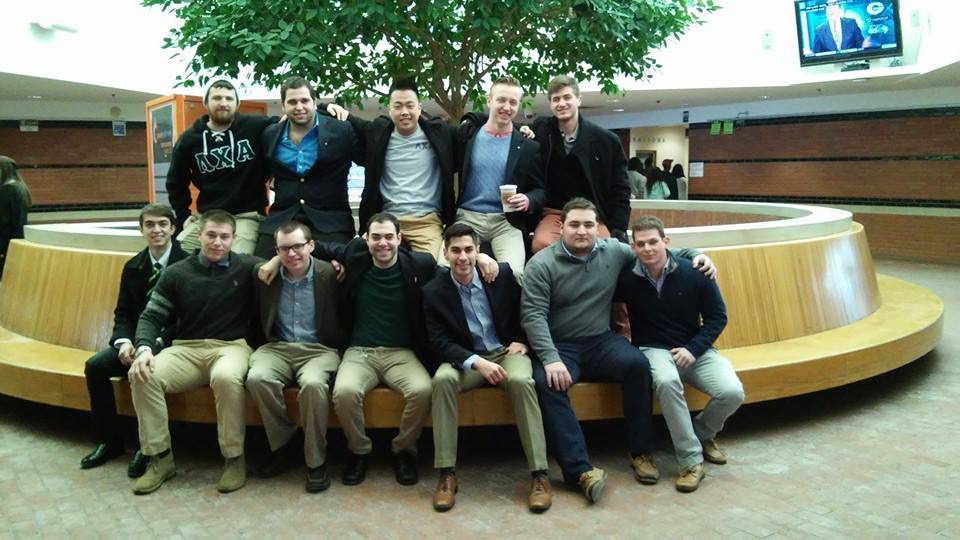
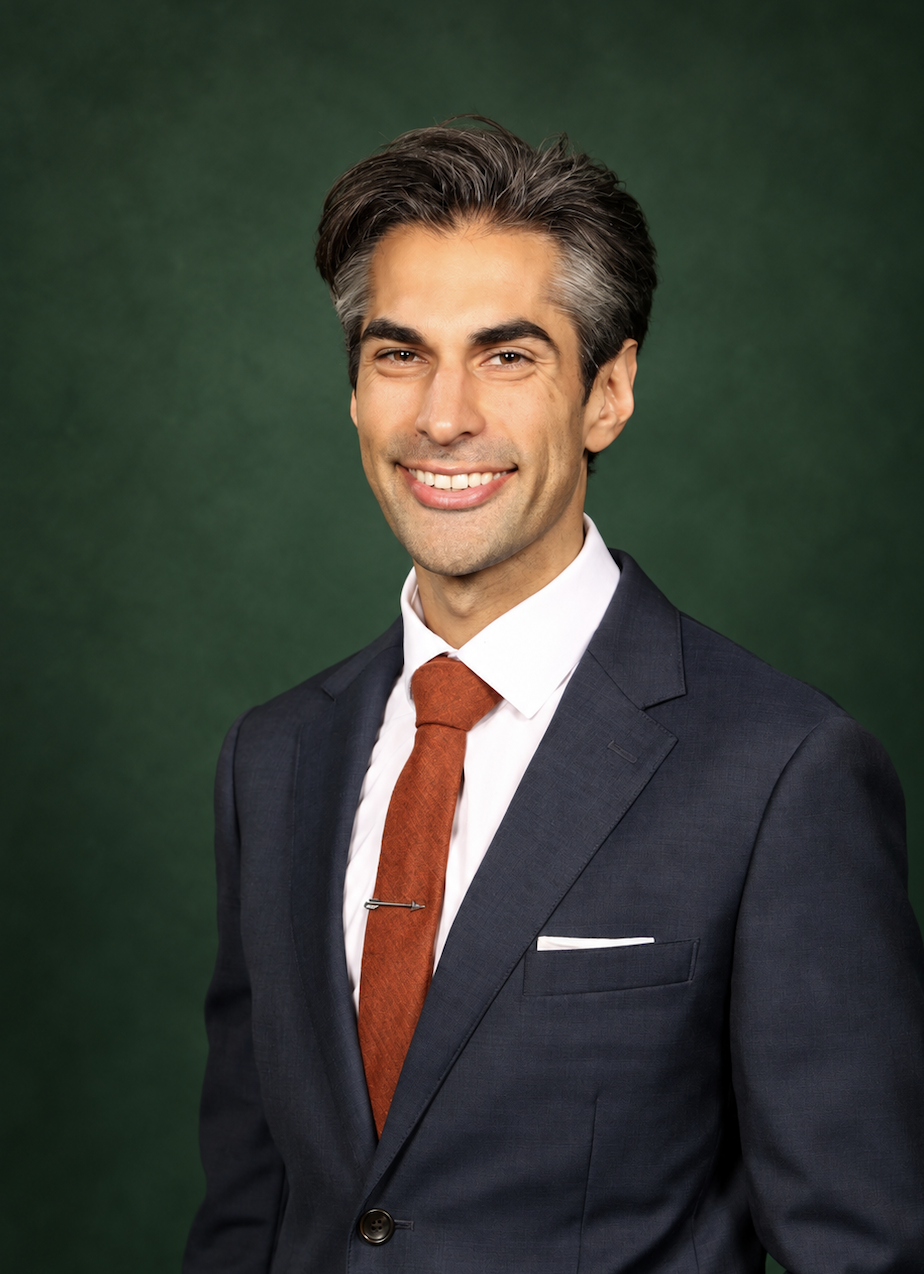 When Lambda Chi Alpha paired Kameron “Kam” Kang (Syracuse, ’15) and Andres Diz (Syracuse, ’16) as co-bros at Syracuse University, the assignment came with a little competition. The idea was simple: spend time together. The co-bro pair that did the most together would win.
Kam and Andres worked out together. They grabbed lunch. They attended sporting events and volunteered together. Eventually, determined to make sure they had the competition locked down, they even found themselves at Build-A-Bear.
Kam remembers looking at Andres and saying, “Let’s win this.”
So they did.
Neither of them knew that the same competition was beginning a relationship that, more than a decade later, would become one of the most consequential friendships of Kam’s adult life—and eventually help form the foundation of a company.
Today, Kam is the founder and CEO of Homebuyer Wallet, a housing technology company he co-founded with Andres. But understanding how he got there requires going back much further: to Northeast Pennsylvania, military college, an Army commission at 20 and a young man who was initially far more interested in building himself than joining a fraternity.
Building Himself
Kam grew up around Scranton, Pennsylvania. His childhood included periods of financial difficulty and housing instability as his family experienced divorce, foreclosure and the uncertainty that came with both. Those experiences shaped what he began looking for in his own life.
“I was looking to build stability where stability didn’t always exist,” Kam says.
The military appealed to him because it offered structure, service and something else he valued deeply: a clear connection between effort and results. That led him to Valley Forge Military College and its Early Commissioning Program, an accelerated path that could put him on track to become a U.S. Army officer at just 20 years old. Kam saw the format as an opportunity to spend two highly concentrated years developing as a military leader before continuing his education at a more traditional university.
Valley Forge was demanding. Kam did not come from a military family, and he entered an environment defined by competition, limited sleep, constant expectations and very little margin for error. Valley Forge reinforced the belief Kam already carried: effort equals results.
Kam took it seriously, and the results were clear. He completed Valley Forge with honors, graduated as class salutatorian and was named Distinguished Graduate of the Business School. He finished first in his ROTC commissioning class, earned his commission as a U.S. Army officer at the age of 20, and completed both U.S. Army Airborne School and Mountain Warfare School along the way.
All of it in less than two years before most college students had reached the midpoint of a traditional four-year degree.
For Kam, that experience developed his effort equals results philosophy into one that would follow him throughout his career: “If you do everything, you’ll win.”
Then it was time for a completely different kind of education.
Kam had grown up only a few hours from Syracuse University and was already familiar with the school. He wanted a rigorous business education, but he was also looking for something Valley Forge was never intended to provide: breadth. Military college had surrounded him with people pursuing a common mission. Syracuse was the opposite.
Students came from different countries, backgrounds and circumstances. They were pursuing business, science, art, athletics, research and careers Kam had never encountered before. Even move-in felt different. His arrival at Valley Forge had meant processing, instructions, a shaved head and an immediate immersion into military structure. Syracuse felt like a college movie. The campus was buzzing. The university’s Goon Squad helped students move in. There was energy everywhere.
“I never thought of it as starting over,” Kam says. “It felt like I was beginning a new chapter in the book with new characters, new experiences and new challenges. It was exciting.”
But Syracuse also created a different test. Valley Forge had taught Kam how to perform inside an intensely structured system. Syracuse would show whether he could carry that structure inside himself when nobody else was enforcing it.
He stayed locked in.
What he had no intention of doing was joining a fraternity.
Learning Brotherhood 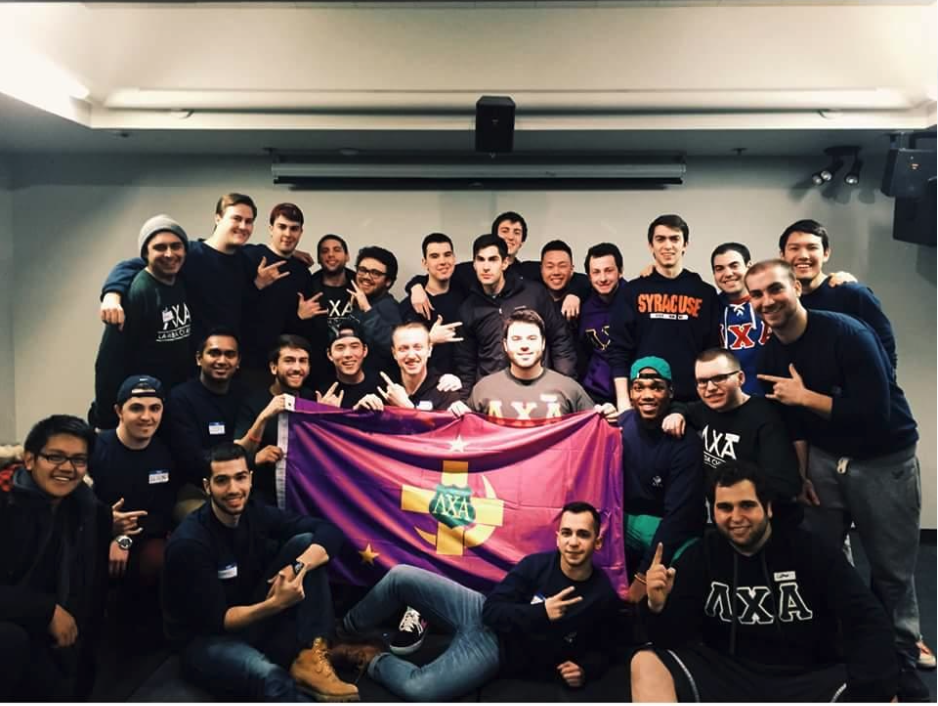
“I had zero interest,” Kam says.
After military college, another organization involving hierarchy, ritual, expectations and brotherhood was about the last thing he thought he needed. Lambda Chi Alpha was not active at Syracuse when Kam first arrived. Later, as a group began working to bring the fraternity back to campus, several people he respected became involved. Kam started attending meetings.
Then something unexpected happened: the values sounded familiar.
The Army had built much of Kam’s leadership foundation around LDRSHIP: Loyalty, Duty, Respect, Selfless Service, Honor, Integrity and Personal Courage. Lambda Chi Alpha used essentially the same framework, with one meaningful adaptation. Instead of Selfless Service, Lambda Chi emphasized Service and Stewardship.
That mattered to Kam.
“I had very specific things that I valued in myself,” he says. “I didn’t want to give those up just to become part of a bigger group.”
Lambda Chi did not ask him to. In some ways, it gave him a new way to understand values he already knew. Service was familiar. Stewardship went further. It meant recognizing that something had been entrusted to you temporarily, a chapter, an organization, a relationship and that your responsibility was to care for it and leave it stronger than you found it.
That idea would become more important to Kam long after college.
Kam arrived at Lambda Chi with a military understanding of brotherhood. In the military, brotherhood can be expressed in its most extreme form: the willingness to put yourself in danger for the person beside you. Lambda Chi taught him to appreciate a quieter version.
“Everybody can say, ‘I’d jump on a grenade for my brother,’” Kam says. “But most of life isn’t that moment. It’s showing up when you don’t have to.”
Showing up when helping is inconvenient. Making the call. Having the conversation. Supporting someone through a difficult period. Standing beside a person while still respecting the needs and values of the broader group.
Kam began thinking of those moments as deposits. “A lot of people want to make withdrawals from relationships they haven’t put anything into,” he says. “You have to make the good-faith deposits.”
For someone who had spent much of his young life focused on achievement, Lambda Chi widened the definition of what mattered. Relationships required effort too. So did community. And unlike a military assignment or a class, nobody could order you to invest in them.
You had to choose to show up.
What Compounds
The value of that lesson would take years to reveal itself.
After college, Kam went aggressively into residential real estate in Washington, D.C. He built a leading residential sales team, earned recognition as one of the National Association of REALTORS®’ 30 Under 30 and quickly began moving beyond individual transactions into broader industry leadership.
By his early 30s, Kam was earning appointments to national advisory roles focused on multiple listing services, real estate technology and emerging industry issues. He increasingly found himself working alongside CEOs, MLS executives and industry leaders with decades more experience.
That gave him an unusual perspective. He was still close enough to the transaction to understand what buyers, sellers and housing professionals dealt with every day. At the same time, his industry work allowed him to see the larger systems shaping those transactions.
And one problem kept becoming harder to ignore.
The housing instability Kam had experienced as a child had never entirely left the story. Now, after years helping people buy homes, he was seeing the problem from the other side of the table. Significant financial resources existed to help people become homeowners, but they were fragmented, difficult to find and often even harder to use.
That insight would eventually contribute to Homebuyer Wallet, which Kam describes as a housing financial intelligence layer designed to help consumers and housing professionals find and use Community Home Investment Programs, or CHIPs including housing grants, down payment assistance, rate buy-downs and other creative financing tools. Simply put, Kam is trying to make it easier and more affordable for people to buy homes.
For him, the work is deeply personal.
The boy who had once wished someone could step in and save his family from foreclosure grew into the man determined to fight for other families.
What had once made him feel powerless became a problem he now had the experience, relationships and opportunity to confront.
But building the company would require more than Kam. That is where the deposits made years earlier mattered.
Andres had followed his own path after Syracuse, ultimately building expertise in renewable energy finance, capital and investment. Kam and Andres were not spending the decade after college preparing to start a company together. They were living their lives.
They found a shared love of music. They traveled. They went to festivals and events around the country. They worked on projects, traded ideas and watched each other develop. Their friendship grew because they kept investing in it.
Those years also gave Kam something that cannot be manufactured during a founder search: time to observe Andres’ character before either of them knew they might someday become business partners. Kam saw how Andres thought, how he handled success, how he approached risk and how he treated people. Andres had the same opportunity to watch Kam.
By the time the two began seriously considering what they could build together, the trust came first.
Their professional strengths had also developed in very different but complementary directions. Kam had spent his career building businesses, understanding consumers, developing relationships and operating inside the housing market. Andres brought a more financial and analytical approach shaped by years in renewable energy finance, capital and investment.
That is what Kam means when he describes the partnership as “yin and yang.” They do not approach every problem the same way. That is part of the point. Their shared values created enough trust for their different perspectives to make the partnership stronger.
Lambda Chi had introduced them. The decade afterward gave Kam and Andres time to discover what kind of people they would become and whether the relationship was worth stewarding.
It was.
Sitting in the Shade
 Kam is unequivocal when asked whether Homebuyer Wallet would exist in the same form if he had never joined Lambda Chi.
“No,” he says. “Without Lambda Chi, Andres and I wouldn’t have the relationship we have. And without both of us, Homebuyer Wallet doesn’t exist the way it does.”
Yet that realization did not arrive while Kam was in college. That may be the part of the Lambda Chi experience he appreciates most today.
It took time.
“The value of Lambda Chi is really sinking in now, ten years removed,” Kam says. “You build these relationships and eventually you realize you’re sitting in the shade of trees that were planted years ago.”
At 20, it is almost impossible to know which relationships will matter most. You do not know which brother will still be in your life a decade later, which disagreement is teaching you how to handle conflict, which ordinary afternoon is building trust, or which friendship will survive changing careers, cities and circumstances.
You make the deposits anyway. You steward the relationships anyway. Only later do you discover what they became.
Looking back, Kam can see a progression through the institutions that shaped him. His early life created a hunger for stability. Valley Forge taught him discipline and achievement. Syracuse tested his independence. Lambda Chi taught him that accomplishment alone was incomplete that brotherhood required service, relationships required investment and anything worth inheriting also carried a responsibility to steward it well.
Those lessons followed him into leadership, business and eventually the company he is building today. They have also changed what the idea of an Ideal Man means to him.
It is not a finished state or a title earned through a list of accomplishments. It is the continuing responsibility to develop yourself, show up for other people, care for what has been entrusted to you and leave it stronger for whoever comes next.
Sometimes the most consequential things you build are not the things you set out to build.
And sometimes it takes ten years before you finally get to sit in the shade.